
Today, we’re sharing the story of “Jane” (name changed for confidentiality), a first-time mum who came to us with one of the most common breast health conditions we see—mastitis.
Jane’s Story
Jane is a first-time mum of a 4-month-old baby, who she had been successfully breastfeeding from the first day at hospital. She hadn’t had any problems with feeding in this time, aside from some initial breast and nipple trauma from learning how to breast feed in the first few weeks (which she managed with nipple shields). Other than that, her breastfeeding journey had started becoming progressively easier for them all.
Jane was a bridesmaid in a wedding around this time, and her parents were able to help out by looking after bubs for a few hours whilst she was apart of the ceremony. She had been running around for a few weeks leading up the wedding, helping her bride with lots of tasks leaving her quite exhausted. During the wedding Jane did not breastfeed her bub or pump as she normally would (a total of 6 hours without feeding) which lead to a build up of milk in the breast tissue and engorgement.
Once Jane attempted to breast feed that night, she noted that her bubs’ latch felt a bit different than it normally did and was a bit fussier however after this she fed as normal. The next day, she woke up feeling rundown, tired, fatigued and noticed a painful pink tinge to the skin overlying her left breast. She called us at Total Balance and booked in an appointment with our osteopath Loz who has had further training in breast health treatment.
The Diagnosis and Treatment
Loz diagnosed Jane with mastitis, a condition caused by milk stasis in the breast, though no infection was present in her case. With three daily treatments, Loz helped Jane become pain-free and get her mastitis under control. The treatment included a combination of gentle hands-on techniques and the use of our therapeutic ultrasound machine.
What Causes Mastitis?
Mastitis is a common condition among breastfeeding mothers, and Jane’s situation highlights two leading contributors:
-
Fatigue and Being Run Down
Research shows that being rundown or having a recent illness can increase the likelihood of developing mastitis. For Jane, her busy schedule leading up to the wedding left her physically depleted, making her more susceptible. -
Changes in Feeding or Pumping Frequency
A sudden change in the frequency of feeding or pumping can lead to milk stasis, where milk builds up in the breast tissue. This was the case for Jane during the wedding when she missed her regular feeding schedule.
What Can You Do?
Sometimes, life’s demands or social events can disrupt your routine, and that’s okay. The key is to be aware of the factors that can contribute to mastitis so you can act quickly if symptoms arise.
If you notice signs of mastitis, such as:
- A pink or red tinge on the skin of the breast.
- Pain or tenderness in the breast.
- Fatigue or feeling rundown.
- Changes in your baby’s latch or fussiness during feeding.
It’s important to seek help early.
How We Can Help
At Total Balance Healthcare, we specialize in treating breast health conditions like mastitis. Our osteopaths use gentle, effective techniques to help reduce pain, manage symptoms, and support your breastfeeding journey.
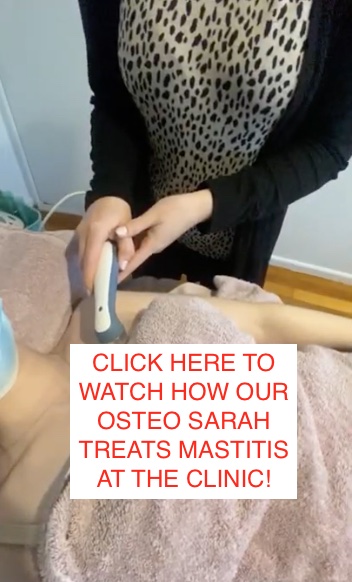
Check out this video from our osteopath Sarah, where she demonstrates how we typically treat mastitis in the clinic!
Reach Out for Support
If you have any questions or concerns about breastfeeding conditions, or if you think you may be experiencing mastitis, we’re here to help. Call us at (03) 9773 8085 or book an appointment online. It is important that we see you straight away, so if you can’t find an appointment online, call us! We can wiggle our diary to get you in.
Breastfeeding can be a challenging journey, but with the right support and care, you can navigate these hurdles and continue to provide for your little one with confidence.
✌️
The Team @ Total Balance
LET’S GET SOCIAL!!!!


This blog post is an educational tool only. It is not a replacement for medical advice from a registered and qualified doctor or health professional.
Phone: (03) 9773 8085


