
Our upper limbs are essential to our daily lives—lifting a kettle, typing on a computer, or even cuddling your kids all rely on the intricate workings of your shoulders, elbows, wrists, and hands. Among these, the shoulder complex plays a pivotal role. As the largest joint in the upper limb, it offers a remarkable range of motion but is also prone to injury and discomfort. Let’s dive into the fascinating anatomy of the shoulder and explore how to keep it healthy and pain-free.
The Anatomy of the Shoulder Complex
The shoulder complex is a marvel of engineering, consisting of three main bones:
- Clavicle (collarbone)
- Scapula (shoulder blade)
- Humerus (upper arm bone)
These bones form multiple joints that work together to provide mobility and stability:
- Glenohumeral Joint: A ball-and-socket joint between the humerus and the glenoid cavity of the scapula.
- Sternoclavicular Joint: Connecting the clavicle to the sternum at the chest.
- Acromioclavicular Joint: Between the clavicle and the tip of the scapula.
- Scapulothoracic Joint: A functional articulation between the scapula and the ribs/mid-back.
The shoulder’s close relationship with the thorax and neck means that treating these areas is often crucial when addressing shoulder pain. For instance, nerves supplying the shoulder originate from the neck, so issues in this region may contribute to discomfort.
Why Shoulder Pain Happens
While the shoulder’s wide range of motion is impressive, it comes at a cost. Its mobility makes it susceptible to various injuries, such as:
- Rotator cuff injuries
- Impingement syndromes
- Dislocations
Given how much we rely on our shoulders daily, any pain or discomfort can significantly impact our quality of life. That’s why shoulder complaints are among the most common issues we treat at Total Balance Healthcare.
Our Approach to Shoulder Pain
When you visit us with shoulder pain, our first step is a thorough consultation. We take a detailed history to understand your daily physical demands and pinpoint aggravating factors. This is followed by a comprehensive examination of not just your shoulder but also your neck, mid-back, ribs, and other upper limb joints to identify the root cause of your discomfort.
Our treatment approach focuses on addressing all contributing areas to deliver the best outcomes. Common techniques we use include:
- Soft tissue therapy
- Joint articulation
- Dry needling
- Kinesiotaping
- Shockwave therapy (in select cases)
We also emphasize the importance of rehabilitation exercises to achieve long-term results. These exercises are demonstrated during your session to ensure you’re confident in performing them at home.
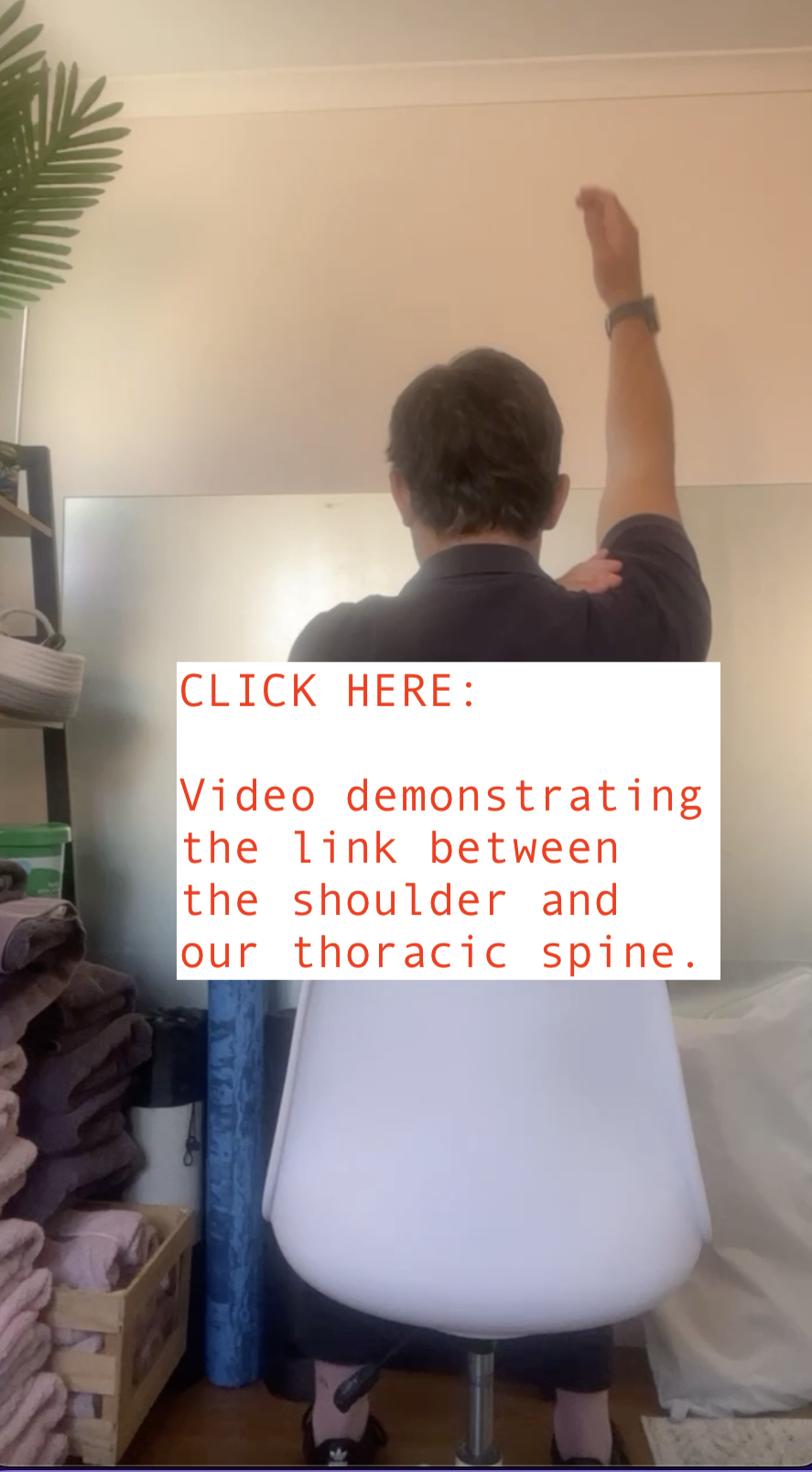
By learning about the anatomy of the shoulder complex we can see that the shoulder has a very close relationship to our thorax and as a result treating both these areas is crucial when treating a shoulder complaint. In addition our shoulder joint is supplied by nerves that originate from our neck and thus why it is important for us to look at this area also as a possible cause of your shoulder pain. In the video below, James, one of our TBHC osteopaths, demonstrates brilliantly the link between the shoulder and the mid back.
Do You Need Imaging or Injections?
When it comes to imaging, like X-rays or MRIs, it’s not always the first step. We evaluate whether a scan will provide additional, actionable information that could alter your treatment plan. If not, we may recommend starting with conservative treatment.
Similarly, corticosteroid injections can offer temporary pain relief but are often not the best first-line treatment unless the injury is severe. A combination of manual therapy and a tailored strengthening/stretching program typically provides safer and longer-lasting results.
Take Control of Your Shoulder Health
Shoulder pain doesn’t have to limit your life. At Total Balance Healthcare, we’re here to help you get back to doing what you love—whether that’s playing with your kids, hitting the gym, or simply enjoying pain-free movement.
If you’d like to learn more about shoulder anatomy and rehabilitation, check out the blog post on the “painful shoulder”. It’s packed with practical tips and exercises to support your recovery.
Got questions or ready to start your treatment journey? Contact our friendly team at 9773 8085 or book an appointment online. Let’s get your shoulders moving freely again!
Remember, shoulder pain is not something you have to endure. With the right assessment and management plan, you can regain control and live pain-free.
Here’s to healthy shoulders and a great week ahead!
✌️ the team @ Total Balance
LET’S GET SOCIAL!!!!


This blog post is an educational tool only. It is not a replacement for medical advice from a registered and qualified doctor or health professional.
Phone: (03) 9773 8085


