
If Hollywood movies have taught us anything false about labour, it’s that you must deliver on your back with legs in stirrups.
Optimal Foetal Positioning
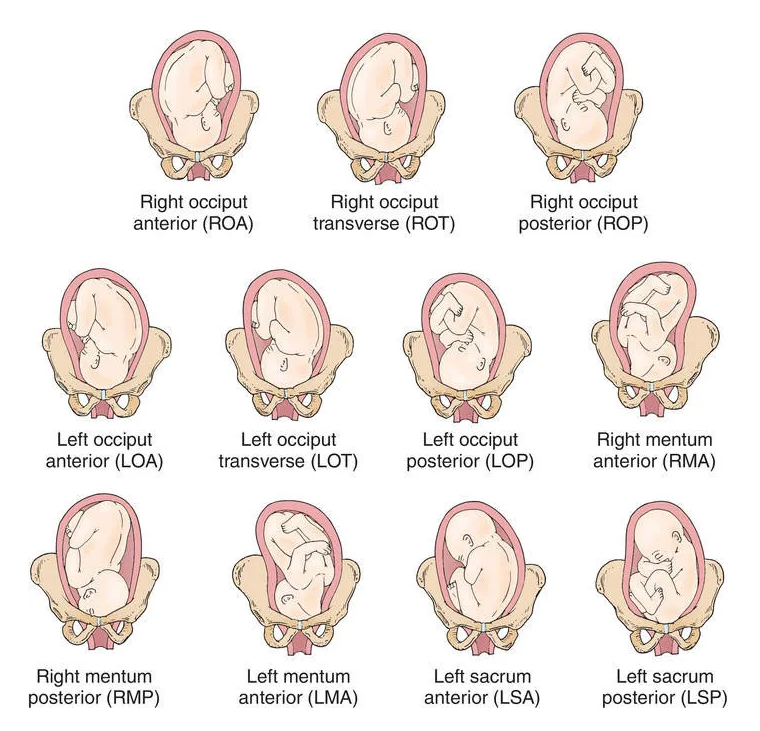
Active Birth Positions for Each Stage of Labour
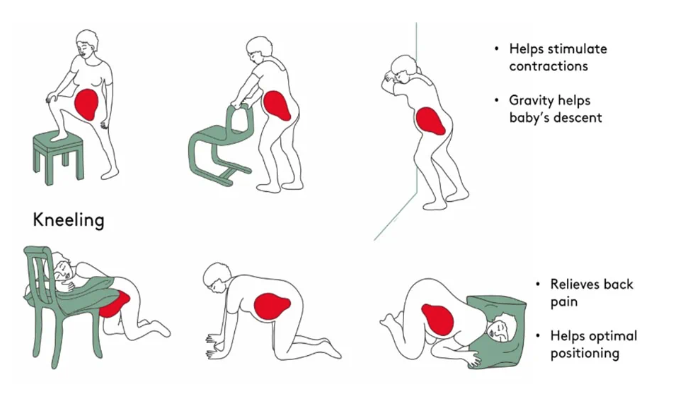
Early Labour
In the early first stage of labour, your cervix begins to thin and dilate to about 3cm. This is often the stage where women labour at home, seeking positions of comfort to manage contractions.
Some beneficial positions during early labour include:
- Standing in the shower: The warm water can help ease tension and discomfort.
- Sitting in a bath: A great way to relax while managing early contractions.
- Walking around: Staying mobile can help encourage the baby to descend.
It’s recommended to avoid lying on your back during this stage, as it can reduce blood supply to your belly and baby.
First Stage of Active Labour
As labour progresses, the cervix dilates from 3cm to 10cm, and contractions become stronger and more frequent. During this stage, staying upright and mobile is key.
Benefits of active positions during this stage include:
- Helping the baby descend closer to the birth canal.
- Encouraging the baby to move into an optimal foetal position.
- Reducing the chance of lower back pain.
Positions to try during the first stage of active labour:
- Standing or leaning forward: Use a counter, chair, or partner for support.
- Sitting on a birthing ball: Gentle rocking or bouncing can ease discomfort.
- Kneeling on all fours: Helps relieve back pain and encourages baby’s movement.
Second Stage of Active Labour
The second stage begins when your cervix is fully dilated and lasts until your baby is born. Contractions are regular and spaced apart, and you may feel the urge to bear down and push as each contraction peaks.
Maintaining an upright position during this stage can open your pelvis and make pushing more effective. Beneficial positions include:
- Squatting: Opens the pelvis and uses gravity to assist.
- All Fours: Relieves pressure on the back and creates space in the pelvis.
- Leaning Over a Chair or Fitness Ball: Provides support while allowing freedom of movement.
If you have an epidural, your mobility may be limited. However, you can still labour in a side-lying position, which allows movement of the tailbone and sacrum, helping the baby travel through the birth canal.
Why Avoid Lying on Your Back?
Lying on your back during labour can make it harder for the baby to move through the pelvis due to the reduced space and the effects of gravity. It can also be uncomfortable for the mother and may slow the progression of labour. Unless medically necessary, it’s best to explore other positions that support the natural mechanics of labour and delivery.
Preparing for an Active Birth
Active birth positions are not just about comfort—they empower you to take control of your birthing experience and work with your body’s natural instincts. At Total Balance Healthcare, we’re here to guide you through the process with tailored birth preparation appointments.
These appointments cover:
- Education on active birth positions and their benefits.
- Strategies to encourage optimal foetal positioning.
- Guidance on managing labour and pain relief options.
- Answers to any questions you may have about labour and delivery.
We Are Here To Support You— The Way You Need
If you have questions about active birth positions or would like to book a birth preparation appointment, we’re here to help. Call us at (03) 9773 8085 or book online here.
Our goal is to help you feel confident, empowered, and prepared for your delivery, so you can achieve the birthing experience you desire.
Have a great week!
✌️
The Team @ Total Balance Healthcare
LET’S GET SOCIAL!!!!


This blog post is an educational tool only. It is not a replacement for medical advice from a registered and qualified doctor or health professional.
Phone: (03) 9773 8085


