
Breastfeeding is a beautiful yet sometimes challenging journey that many women experience.
While it brings incredible benefits for both mother and baby, it can also come with its own set of hurdles, especially when it comes to breast health. At Total Balance Healthcare, we frequently see and treat a range of breastfeeding conditions, helping mums navigate these challenges with care and support. Whether you’re just starting your breastfeeding journey, in the middle of it, or nearing the end, understanding common conditions and how to manage them can make a world of difference.
Last week we discussed the topic of antibiotic use with mastitis, and why you don’t always need them! Today we are going to talk about the different type of breast health conditions we treat at Total Balance, and how we treat them.
Breastfeeding women can often develop breast feeding conditions such as mastitis at the start, during, or even at the end of their breastfeeding journey. Breastfeeding isn’t always easy for women – more often than not it is a bit of a rocky start and is harder than a lot of women realise. Thankfully there are a plethora of practitioners such as lactation consultants, midwives, osteopaths, maternal child health nurses, etc. who are here to help on this journey.
Initially when mum and bub are getting familiar with breastfeeding there are a lot of different factors to try coordinate – the timing, the length of the feed, and hand-holds and positions to breastfeed just to name a few. This can result in breast or nipple trauma (which may be accompanied by pain and discomfort) and the breast tissue itself has to become accustom to it’s new demands. Milk flow and fluid flow without complete emptying (i.e. breastfeeding or pumping) can occur, leading to fluid blockages and milk stasis. When left untreated this can lead to breastfeeding conditions.
Common Breastfeeding Conditions We Treat
Here are some of the most common breastfeeding conditions we see and treat at our clinic near Patterson Lakes:

Mastitis
As we mentioned in last week’s email, mastitis is an inflammatory condition of the breast which may or may not be accompanied with an infection. Mastitis most commonly (but not exclusively) occurs in lactating women due to the potential of milk stasis. Milk stasis is where the milk isn’t moving out from the breast as optimally as we would like. Milk stasis can be caused by a number of things including blocked ducts, infrequent emptying of the breast.
Blocked Ducts
Blocked ducts occur when there is localised milk stasis to a certain region (such as a lobe) of the breast. This milk stasis leads to the milk being unable to flow through to the nipple, resulting in formation of a lump. Blocked ducts usually occur due to insufficient drainage of milk from a duct in the breast, and as milk builds up behind the blockage, the small lump forms.
Engorgement
Engorgement is when the breast tissue becomes enlarged, swollen, and painful due to a sudden increase in milk production. Engorgement can be broken down into physiological engorgement and pathological engorgement.
Physiological engorgement occurs when a woman’s milk production rapidly increases during the first few days after giving birth to meet the demands of feeding, and usually occurs in the first 2-6 days. Pathological engorgement occurs any time during your breastfeeding journey, by external factors such as wearing tight-fitted clothing or bras, or skipping/missing a feed that is in your normal routine.
If left untreated engorgement can lead to feeding and latching problems, a decrease in milk supply, and other breast feeding conditions caused by milk stasis including mastitis and blocked ducts.
Milk blebs
A milk bleb (otherwise known as a milk bliser) is a clogged pore on the nipple which gets clogged by a piece of skin or hardened breast milk. They can be quite tender and painful and commonly occur alongside blocked ducts and mastitis.
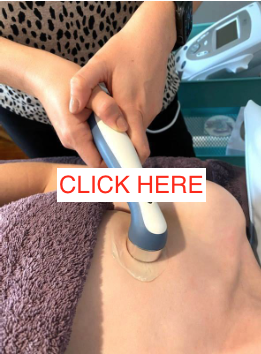
So how do we treat this at the clinic? Our osteopaths Loz, Megan, Simmone and myself can gently treat the breast tissue with specific techniques to help encourage fluid flow out of the breast tissue. We also have a therapeutic ultrasound machine, which we use in conjuection with our hands-on techniques to achieve the best results for you. Due to the delicate nature of breast tissue, our treatments are very gentle – you don’t need much pressure to achieve beneficial results. To learn a bit more, jump over to our website to read our blog on therapeutic ultrasound!
If you have any questions about any of these breastfeeding conditions, or are experiencing anything you think may be one of these breastfeeding conditions please give us a call at the clinic on (03) 9773 8085 or book an appointment online.
✌️
The Team @ Total Balance
LET’S GET SOCIAL!!!!


This blog post is an educational tool only. It is not a replacement for medical advice from a registered and qualified doctor or health professional.
Phone: (03) 9773 8085


