
Hip stiffness can be a frustrating issue that affects your ability to move freely and enjoy daily activities.
We often see patients dealing with hip discomfort, and we’re here to help you better understand this important joint, why stiffness happens, and how you can improve your hip mobility with some simple exercises.
What is the Hip Joint?
The hip is a ball-and-socket joint, formed by the head of the femur (thigh bone) and the acetabulum of the pelvis.
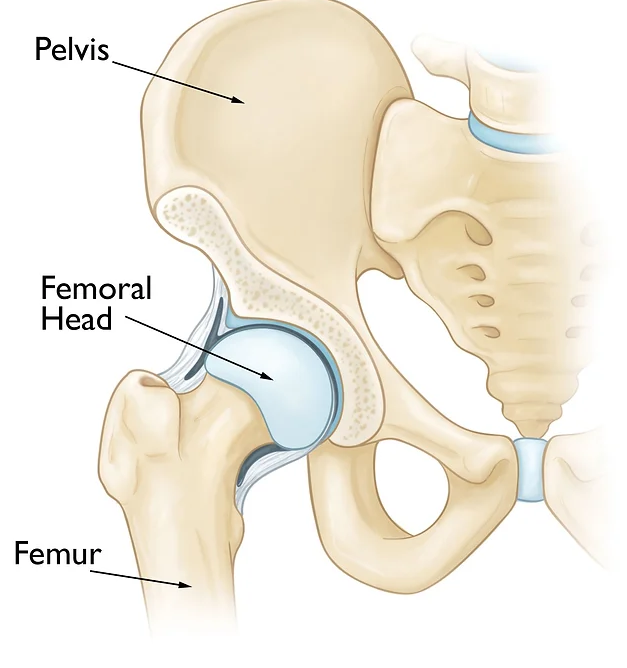
This structure makes it one of the most stable joints in the body, supported by a network of muscles, ligaments, and tendons. Despite its stability, the hip joint is susceptible to a range of conditions that can cause pain and stiffness, including:
- Bursitis
- Hip joint impingement
- Osteoarthritis
- Labral injuries
These conditions can affect not only how your hip feels but also how well it moves—its mobility. Reduced mobility often goes hand in hand with muscular tightness, which can worsen symptoms and lead to further discomfort.
Why is Hip Mobility Important?
When the hip joint lacks mobility, it can create a ripple effect throughout the body. Poor hip mobility can lead to compensations in other areas, such as the lower back, knees, or pelvis, resulting in additional pain or dysfunction.
By focusing on improving hip mobility, you can:
- Reduce pain and stiffness in the hip joint.
- Improve overall movement and flexibility.
- Prevent compensatory issues in other parts of the body.
- Enhance your ability to perform daily activities and exercises.
Simple Exercises to Improve Hip Mobility
Incorporating mobility exercises into your daily routine is a great way to address hip stiffness and improve how your hips feel and function. Below are a few simple exercises you can try at home:
-
Hip Flexor Stretch
- Kneel on one knee with the other foot flat on the ground in front of you.
- Gently push your hips forward until you feel a stretch in the front of your hip.
- Hold for 20-30 seconds and repeat on the other side.
-
Seated Figure-4 Stretch
- Sit on a chair and cross one ankle over the opposite knee.
- Gently lean forward to deepen the stretch in your hip.
- Hold for 20-30 seconds and switch sides.
-
Glute Bridges
- Lie on your back with your knees bent and feet flat on the floor.
- Push through your heels to lift your hips toward the ceiling, engaging your glutes.
- Lower back down slowly and repeat for 10-15 repetitions.
-
Hip Circles
- Stand on one leg and gently swing the other leg in small circles, both clockwise and counterclockwise.
- Perform 10 circles in each direction, then switch legs.
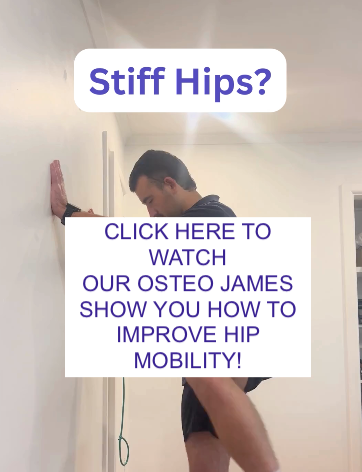
For a visual demonstration of these exercises, click on the picture below to watch our osteopath James walk you through them step by step.
When to Seek Professional Advice
While these exercises are a great starting point, it’s important to remember that every individual is different. If you’re experiencing persistent hip pain or stiffness, or if you have a specific condition affecting your hip joint, a tailored rehabilitation plan is essential.
At TBHC, our osteopaths can assess your hip mobility, identify the underlying causes of your stiffness, and create a personalised treatment plan to help you move and feel better.
Take the First Step Toward Better Hip Health
Hip stiffness can be niggly which then progresses to holding you back from moving freely- then all of a sudden you realise you can’t move like you used to. There is lots we can do! To book an appointment with one of our osteopaths, call us at (03) 9773 8085 or book online here.
Let’s work together to improve your hip mobility and get you back to doing the things you love!
✌️
The Team @ Total Balance
LET’S GET SOCIAL!!!!


This blog post is an educational tool only. It is not a replacement for medical advice from a registered and qualified doctor or health professional.
Phone: (03) 9773 8085


