
You may have heard stories of family members being “double-nappied” back in the day or may have even had this yourself as an infant – this would have been because of “clicky hips”. So what is all of this hip talk in paediatrics actually all about?

What is Developmental Hip Dysplasia (DDH)?
Developmental Hip Dysplasia (DDH) is a condition where the hip joint, which is a ball and socket joint, develops in utero abnormally. DDH is a condition that is most often discovered whilst babies are still quite young. However, in some cases it can develop later on in an infants first year – thus why it is known as developmental hip dysplasia.
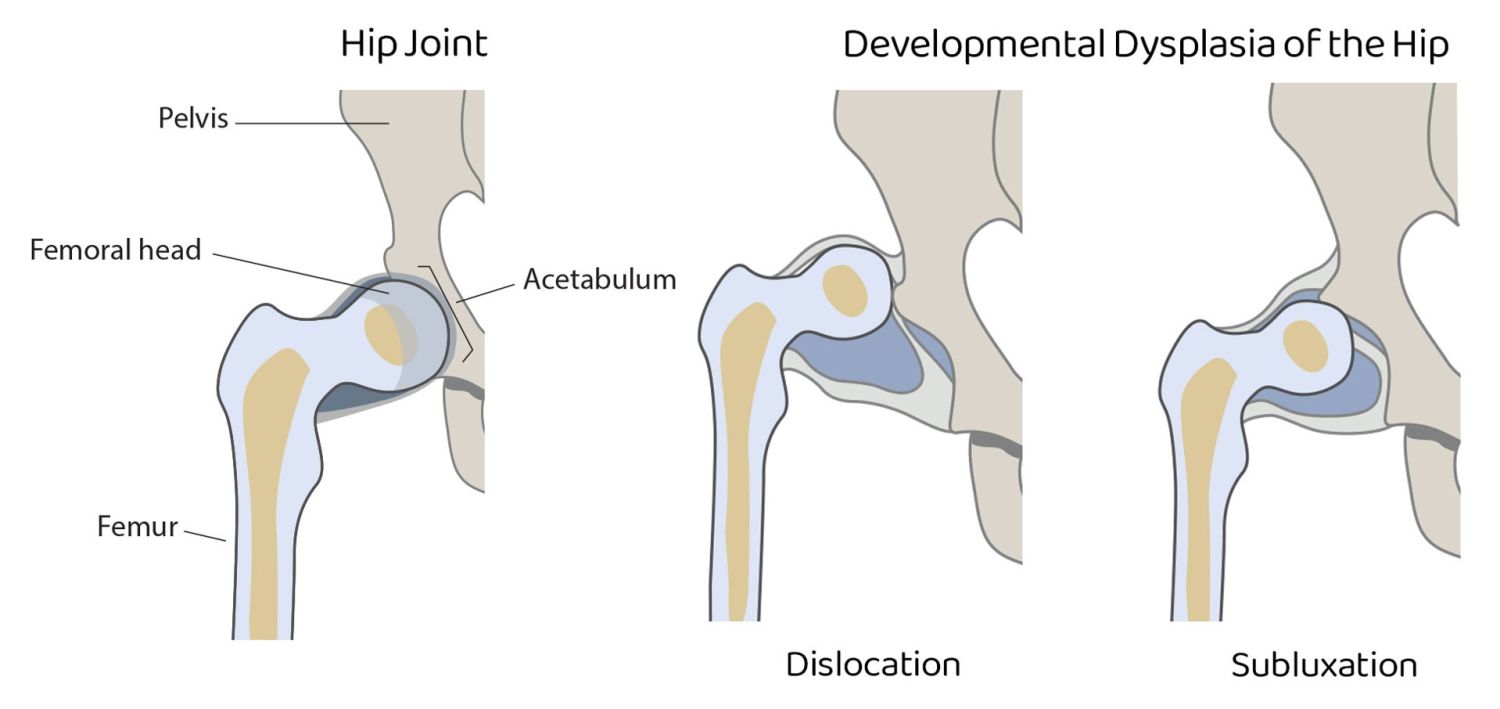
It is something that gets looked for thoroughly, by all health professionals who see infants and paediatrics. Why? Because if picked up early there is a better chance for a quicker recovery. We are very lucky in our area specifically, and in Australia, that hip dysplasia is well screened for, hence it means it is usually picked up and treated early. When you bring you baby in to see one of our paediatric osteos, we will always check your baby’s hips to check for any signs or symptoms of DDH.
Signs and Symptoms of DDH
So what are these signs and symptoms of DDH?
- Asymmetry of hip/thigh creases
- Restricted hip motion and asymmetry between hips. This can be picked up with a physical examination or parents may report feeling a difference in one leg’s movement when trying to change a nappy
- Presence of a click in the hips with a physical examination
Risk Factors for DDH
There are also characteristic predisposing factors/risk factors for DDH, which are:
- Family history of hip dysplasia
- The baby is a twin or multiple
- The baby was in a breech position at birth
- Female babies have a higher incidence of hip dysplasia (due to their anatomy)
If any of these above things are seen, your baby will usually be sent for an ultrasound or x-ray to double check the development of their hips (if they are less than 1 years old, an ultrasound is the preferred method of imaging, an x-ray will be used after this age).
How is DDH Treated?
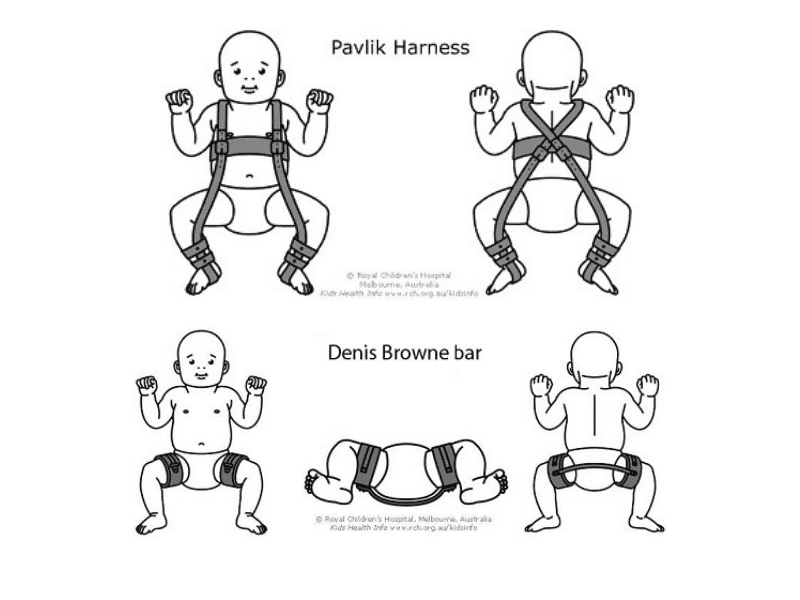
If your baby is diagnosed with an immature hip, or DDH, they will either be rescanned in 4-6 weeks to check for any improvement in development, or potentially put into a hip brace. What this hip brace does, is keep their hips in an optimal position for development. The picture below demonstrates some of the different kinds of braces that are available.
Supporting Your Baby’s Hip Development
For more information, have a read of the blog on our website that our osteopath Simmone wrote! It goes into a lot more detail about DDH, and also talks about some helpful tips and tricks for parents in regards to hip position and swaddling, to help optimal hip development.
Need Help or Have Questions?
If you have any more questions and would like to talk to one of our paediatric osteopaths about DDH, please give us a call at the clinic on (03) 9773 8085 or book an appointment online.
Early detection and proactive treatment can make all the difference in your baby’s development.
✌️
The team @ Total Balance Healthcare


